








The World Turned Upside Down: A New Perspective
{"title":"The World Turned Upside Down: A New Perspective","description":"The World Turned Upside Down: A New Perspective","key_hightlights":"The World Turned Upside Down: A New Perspective","keywords":"The World Turned Upside Down: A New Perspective","content":"The World Turned Upside Down: A New Perspective
\nIntroduction: Challenging Our Worldview
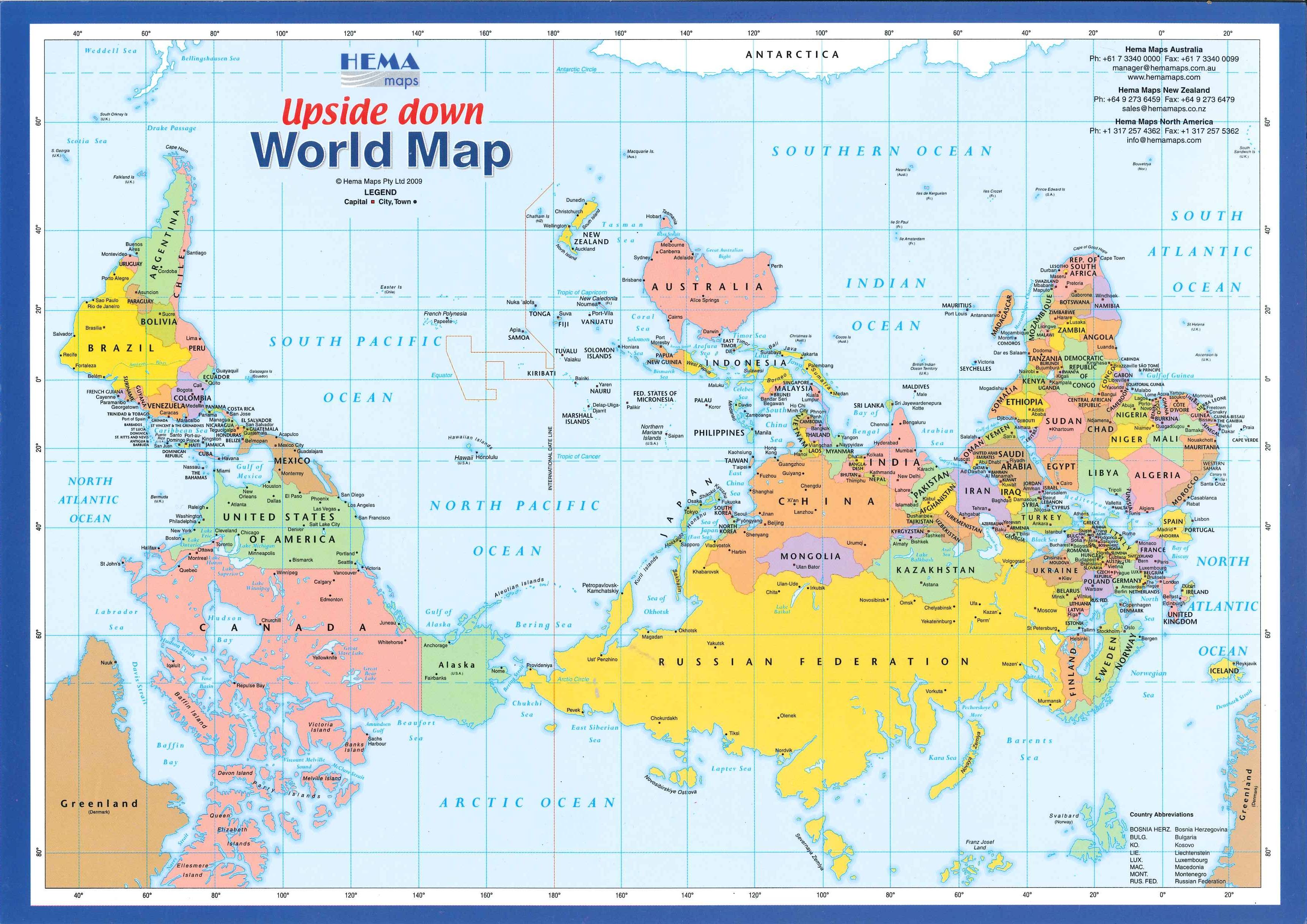
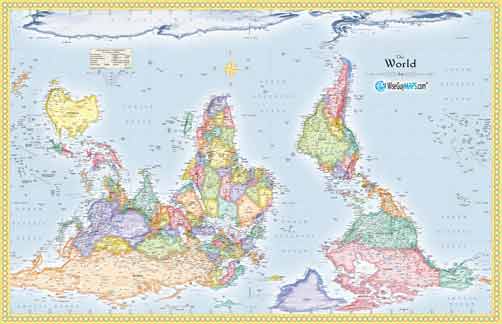
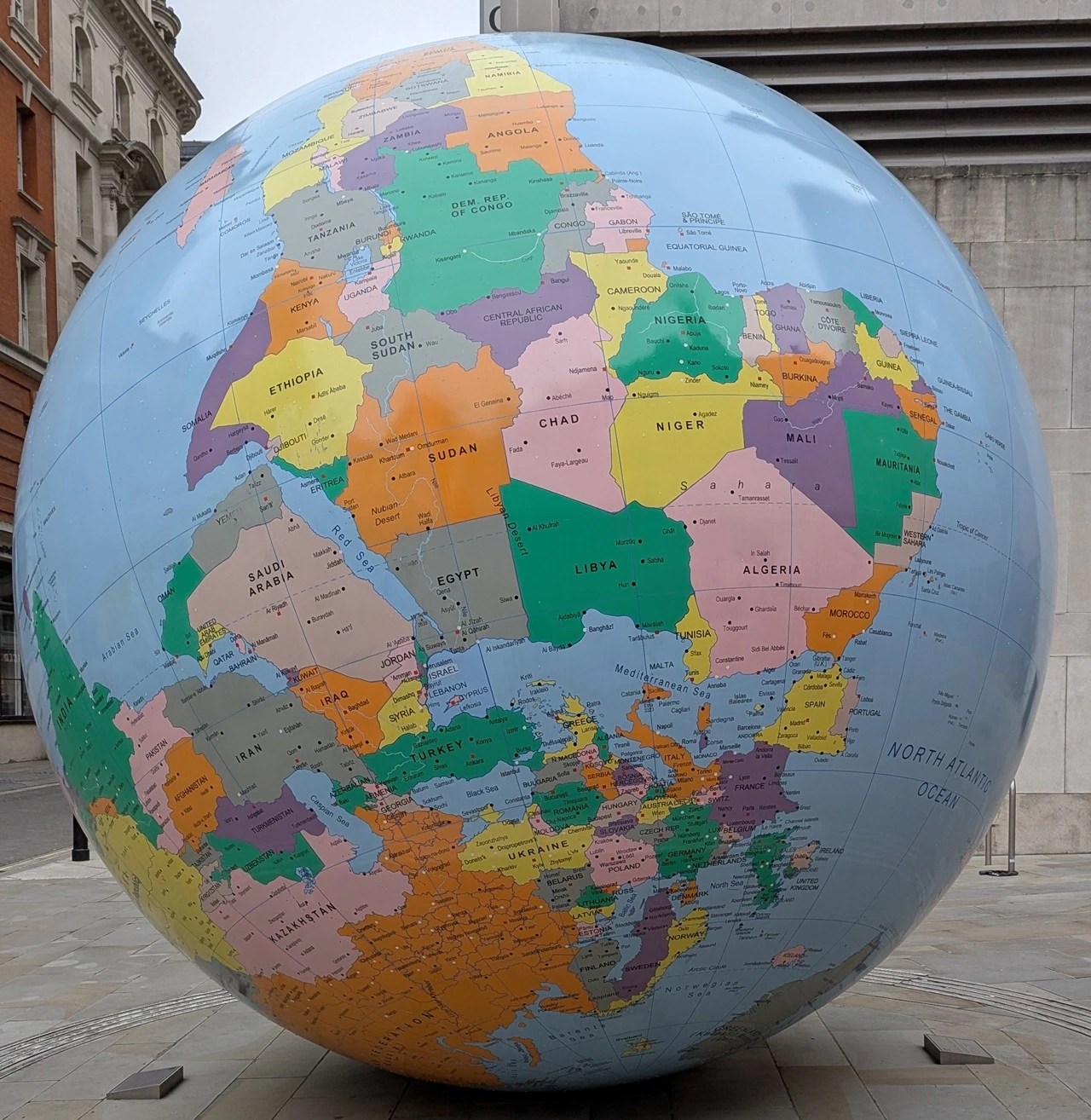
\nHave you ever considered that the way we typically see the world map might not be the only way to view it? For centuries, the conventional map, with North at the top, has shaped our understanding of global politics, culture, and even our place in the world. But what happens when we flip that perspective? The "upside down map of world" challenges these ingrained assumptions, offering a fresh and thought-provoking way to visualize our planet. This week, as interest in alternative perspectives surges, let's delve into the fascinating world of inverted maps and explore their history, implications, and the surprising insights they reveal.
\nTarget Audience: Anyone curious about geography, history, political science, alternative perspectives, and challenging conventional wisdom.
\nWhy "Upside Down Map of World"?
\nOur standard world map, known as the Mercator projection, places Europe and North America prominently at the top, often leading to the subconscious association of "up" with "superiority" and "down" with "inferiority." This isn't intentional malice, but a consequence of how maps are historically produced and used. The "upside down map of world" directly confronts this bias.
\nThe History of the Upside Down Map of World
\nWhile the conventional North-up map has become dominant, it's important to remember that it wasn't always the standard. Historically, different cultures have oriented maps according to their own perspectives and priorities.
\n- \n
- Ancient Maps: Many ancient maps were oriented eastward, reflecting the significance of the rising sun. \n
- European Influence: The rise of European exploration and colonialism cemented the North-up map, which served their navigation and geopolitical interests. \n
- The "McArthur's Universal Corrective Map of the World": An iconic example of the upside down map of world, created by Australian Stuart McArthur in 1979. This map, with Australia at the top, aimed to challenge the perceived Eurocentric bias of conventional maps. \n
(ALT Text: McArthur's Universal Corrective Map, showing Australia at the top. Caption: The famous upside down map of world designed by Stuart McArthur.)
\nGeopolitical Implications of the Upside Down Map of World
\nThe "upside down map of world" is more than just a novelty. It has real geopolitical implications. By shifting the focus away from the Northern Hemisphere, it forces us to reconsider our perceptions of power, influence, and global relationships.
\n- \n
- Challenging Eurocentrism: The inverted map de-centers Europe and North America, giving greater prominence to the Southern Hemisphere. \n
- Re-evaluating Trade Routes: Viewing the world from a different perspective can highlight the importance of north-south trade routes and the growing influence of countries in the Southern Hemisphere. \n
- Environmental Awareness: The map can also underscore the vulnerability of the Arctic region and the impact of climate change on the entire planet. \n
The Psychological Impact of the Upside Down Map of World
\nOur perception of the world is deeply influenced by visual cues, including the maps we use. The "upside down map of world" can have a profound psychological impact.
\n- \n
- Cognitive Dissonance: Initially, the inverted map can feel disorienting and even unsettling, as it challenges our ingrained mental models. \n
- Shifting Perspectives: Over time, however, it can help us to develop a more nuanced and less biased understanding of the world. \n
- Promoting Empathy: By seeing the world from a different viewpoint, we can cultivate greater empathy and understanding for people in different regions. \n
(ALT Text: A child looking at an upside down map of the world, pondering its meaning. Caption: The upside down map of world can help children develop a broader perspective.)
\nPractical Applications of Using an Upside Down Map of World
\nWhile not intended to replace the standard map, the "upside down map of world" has several practical applications.
\n- \n
- Educational Tool: It is a valuable tool for teaching geography, history, and critical thinking skills. \n
- Design and Art: It can inspire new designs and artistic expressions that challenge conventional norms. \n
- Strategic Planning: Businesses and organizations can use it to develop more globally inclusive strategies. \n
Celebrities embracing alternative perspectives:
\nWhile there are no specific celebrity endorsements directly linked to the "upside down map of world," many celebrities advocate for global awareness, social justice, and challenging conventional thinking. For instance, Angelina Jolie, through her humanitarian work and advocacy, consistently challenges global norms and promotes understanding across different cultures and regions. Her work embodies the spirit of questioning established perspectives, which aligns with the core idea behind the "upside down map of world."
\nWho is Angelina Jolie?
\nAngelina Jolie is an American actress, filmmaker, and humanitarian. Born on June 4, 1975, in Los Angeles, California, she has received numerous accolades, including an Academy Award and three Golden Globe Awards, and has been named Hollywood's highest-paid actress multiple times. Beyond her acting career, Jolie is widely recognized for her humanitarian efforts, particularly her work with the United Nations High Commissioner for Refugees (UNHCR), where she served as a Special Envoy for many years. She has traveled extensively, visiting refugee camps and advocating for the rights of refugees and displaced people worldwide.
\nHow to Access an Upside Down Map of World
\nFinding an "upside down map of world" is easier than ever.
\n- \n
- Online Search: A simple online search for "upside down map of world" will yield numerous images, printable maps, and interactive versions. \n
- Specialty Map Stores: Some specialty map stores may carry inverted maps. \n
- DIY: You can even create your own by digitally flipping a standard map or redrawing it manually. \n
(ALT Text: A computer screen displaying an online upside down map of the world. Caption: Access the upside down map of world easily online.)
\nConclusion: A Challenge to Our Assumptions
\nThe "upside down map of world" is a powerful reminder that our perspective shapes our understanding. By challenging our ingrained assumptions, it can open our minds to new possibilities and help us to see the world in a more inclusive and nuanced way. This week, take a moment to consider the world from a different angle. You might be surprised at what you discover.
\nQuestion and Answer:
\nQ: What is an "upside down map of world"?\nA: It's a world map oriented with South at the top and North at the bottom, challenging the conventional North-up perspective.
\nQ: Why is it useful?\nA: It challenges Eurocentric biases, promotes different perspectives, and can be a valuable educational tool.
\nQ: Where can I find one?\nA: Easily available online through search engines, or at specialty map stores.
\nKeywords: upside down map of world, inverted map, alternative world map, map projection, Eurocentrism, global perspective, geography, Stuart McArthur, McArthur's Universal Corrective Map, Angelina Jolie, humanitarian
","qa":"The World Turned Upside Down: A New Perspective","summary":"The World Turned Upside Down: A New Perspective","faqs":""}