Understanding how does cpu improve gaming is crucial for every enthusiast especially for busy adults balancing life and hobbies This comprehensive guide breaks down the vital role of your central processing unit in achieving smoother frame rates faster load times and overall superior gameplay We explore core count clock speed cache and architecture impacts on modern titles and multitasking activities like streaming Discover when to upgrade your CPU how to spot a bottleneck and budget-friendly options for 2026 We also delve into the latest CPU trends and how they cater to social gaming experiences and performance demands for gamers who value both relaxation and skill building without the hype This article offers practical solutions for common gaming pain points from setup issues to hardware upgrades ensuring you get the most value for your gaming investment and stay current with an optimized setup that perfectly fits your lifestyle
How Exactly Does a CPU Improve Gaming Performance
Your CPU orchestrates every non-graphical aspect of a game including AI, physics, and game logic. A more powerful CPU handles these complex calculations faster, leading to higher, more stable frame rates and overall smoother gameplay. It's the silent conductor making sure everything runs in sync for a fluid experience.
Why is a High Core Count CPU Important for Modern Games
Modern games increasingly leverage multiple CPU cores to distribute demanding tasks like complex AI routines and detailed physics simulations. A high core count CPU allows your system to handle these parallel processes efficiently, which prevents bottlenecks and ensures smooth performance, especially in open-world or multiplayer environments.
When Should I Consider Upgrading My Gaming CPU
You should consider upgrading your CPU if your GPU usage consistently stays low (e.g., below 90%) while frame rates are poor, indicating a CPU bottleneck. Other signs include frequent stuttering in CPU-intensive games or general system sluggishness, especially if your current CPU is several generations old compared to your GPU.
What Role Does CPU Clock Speed Play in Gaming FPS
CPU clock speed, measured in GHz, indicates how many instructions a CPU core can process per second. Higher clock speeds translate to faster single-thread performance, which directly boosts FPS in games that rely heavily on individual core speed, ensuring quicker processing of game logic and delivering smoother frame rates.
How Do CPU Cache and Architecture Affect Game Loading and Responsiveness
CPU cache is ultra-fast memory storing frequently accessed data, reducing latency and speeding up game loading times and responsiveness. The CPU's architecture dictates its efficiency, allowing more instructions per cycle (IPC) for quicker processing, resulting in faster asset streaming and a snappier overall gaming experience.
Is My CPU Bottlenecking My Graphics Card How Can I Tell
To identify a CPU bottleneck, monitor your GPU and CPU usage during gaming. If your GPU usage remains low (below 90-95%) while your CPU usage is consistently high (near 100%), especially across multiple cores, your CPU is likely holding back your graphics card's potential performance.
What Are the Best Budget CPUs for Gaming in 2026
In 2026, excellent budget gaming CPUs often include mid-range options from previous generations or current-gen entry-level models like AMD Ryzen 5 (e.g., 7600) or Intel Core i5 (e.g., 14600K from a prior generation). These provide a strong balance of core count, clock speed, and value for 1080p and 1440p gaming.
Are you one of the millions of US gamers, perhaps averaging 10+ hours a week, who finds solace and excitement in virtual worlds after a long day? Like 87% of gamers who regularly jump online, you know the frustration of lag, stuttering, or slow load times interrupting your precious gaming sessions. You're trying to unwind, connect with friends in a social game, or build skills in a competitive title, but your system feels like it's fighting against you. Often, the unsung hero, or sometimes the silent villain, behind these experiences is your Central Processing Unit, or CPU. While the graphics card (GPU) often gets all the glory, your CPU is quietly orchestrating everything else, from game logic and AI to physics and even your operating system's background tasks. Understanding how does CPU improve gaming isn't just for tech gurus; it's essential for every gamer looking to optimize their experience, get the most out of their hardware, and truly enjoy their limited gaming time without unnecessary headaches. This guide will cut through the jargon, providing practical, actionable insights on how your CPU impacts your gaming performance, helping you make informed decisions whether you're building a new rig or upgrading an existing one on a budget.
How Exactly Does a CPU Improve Gaming Performance?
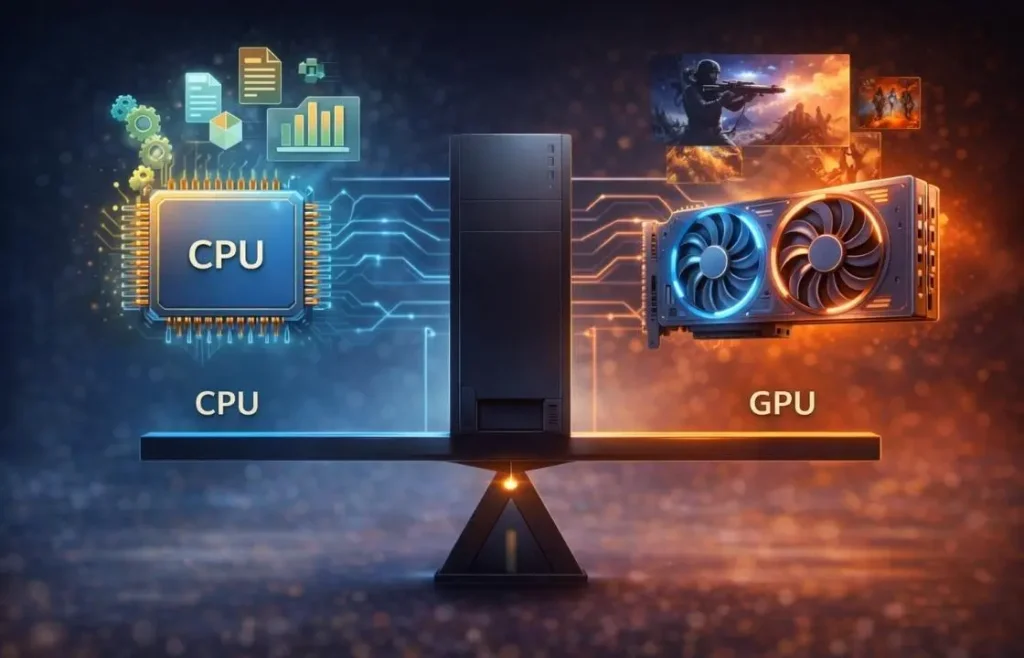
Think of your CPU as the brain of your gaming PC. While your GPU renders the beautiful visuals, the CPU is responsible for almost everything else happening behind the scenes. It processes game logic, artificial intelligence of non-player characters, physics calculations, collision detection, and even manages input from your keyboard and mouse. A powerful CPU ensures these complex calculations are handled swiftly, leading to higher and more stable frame rates, especially in CPU-intensive games or scenarios with many on-screen entities. It also dictates how quickly your game loads and how smoothly the overall system runs, whether you're navigating menus or alt-tabbing to Discord.
Why is a High-Core-Count CPU Important for Modern Games and Multitasking?
In the past, single-core performance and high clock speeds were paramount for gaming. Today, many modern game engines, especially those designed for current-gen consoles and PC, are increasingly optimized to utilize multiple CPU cores. While a game might not use all 16 cores equally, having more cores allows the CPU to handle various game tasks (AI, physics, rendering calls) in parallel, preventing bottlenecks. Moreover, for the busy gamer who also likes to stream, record gameplay, or have multiple applications open (browser, Discord, OBS), a CPU with a higher core count is a game-changer. It enables seamless multitasking without compromising in-game performance, letting you share your experiences or engage with your community while you play.
When Should I Consider Upgrading My Gaming CPU?
Recognizing the right time to upgrade your CPU can save you money and frustration. A key indicator is if your GPU usage is consistently low (e.g., below 90%) while your frame rates are also low, suggesting your CPU isn't feeding your GPU enough data fast enough. This is a classic CPU bottleneck. Other signs include frequent frame rate drops in CPU-intensive games, particularly in open-world titles or online multiplayer battles with many players, or if your overall system feels sluggish even outside of gaming. Gamers often prioritize GPU upgrades, but if your CPU is more than 3-4 generations old, or you've recently upgraded your GPU significantly, your CPU might be the limiting factor. Always check benchmarks for your specific CPU and GPU combination before making a decision.
What Role Does CPU Clock Speed Play in Gaming FPS?
CPU clock speed, measured in gigahertz (GHz), refers to how many cycles your CPU can complete per second. In simpler terms, a higher clock speed generally means the CPU can process instructions faster. While core count matters for parallel tasks, clock speed is still very important for tasks that are inherently sequential, meaning one step must complete before the next begins. Many gaming tasks, especially older or less multithreaded game engines, fall into this category. A higher clock speed often translates to better single-thread performance, which can directly improve frame rates in games that rely heavily on a few powerful cores. Modern CPUs also feature turbo boost technologies that can dynamically increase clock speeds for demanding tasks, offering a balance between efficiency and raw power.
How Do CPU Cache and Architecture Affect Game Loading and Responsiveness?
CPU cache is a small, very fast memory buffer built directly into the CPU. It stores frequently accessed data and instructions, allowing the CPU to retrieve them much faster than from main system RAM. A larger and more efficient cache (L1, L2, L3) directly reduces latency, meaning less waiting for data. This translates to quicker game loading times, smoother transitions between game areas, and more responsive gameplay, as the CPU can access critical game assets almost instantly. Furthermore, the CPU's underlying architecture, which defines how its various components are designed and communicate, plays a massive role. Newer architectures often bring significant 'Instructions Per Cycle' (IPC) improvements, allowing the CPU to do more work per clock cycle, regardless of its raw clock speed. These architectural leaps are often more impactful than a slight bump in clock speed alone.
Is My CPU Bottlenecking My Graphics Card? How Can I Tell?
A CPU bottleneck occurs when your CPU isn't powerful enough to keep up with your graphics card, causing the GPU to wait for instructions and thus underperform its potential. To detect this, you'll need monitoring software like MSI Afterburner or HWMonitor. During gameplay, keep an eye on your GPU usage and CPU usage. If your GPU usage consistently hovers below 90-95% while your CPU usage is frequently at or near 100%, especially across multiple cores, then you likely have a CPU bottleneck. This means your CPU is the limiting factor in achieving higher frame rates, even if your graphics card is capable of more. Conversely, if your GPU is at 99-100% and your CPU is lower, your GPU is the limiting factor, which is generally what you want for optimal gaming performance.
What Are the Best CPUs for Gaming on a Budget in 2026?
In 2026, budget-conscious gamers have excellent options, often finding great value in last-generation's mid-range performers or current-generation entry-level offerings. For example, AMD's Ryzen 5 series (like a Ryzen 5 7600 or a previous generation 5600X) or Intel's Core i5 series (such as a Core i5 13600K or 14600K from a previous generation) often provide an exceptional balance of price and performance. These processors typically offer 6-8 cores with strong single-thread performance, capable of handling most modern games at 1080p and 1440p resolutions comfortably. Look for CPUs that offer a good upgrade path on their respective platforms, allowing you to potentially drop in a more powerful CPU later without a full motherboard swap. Keep an eye out for sales, especially around major holidays, as components can see significant price drops.
How Does CPU Choice Impact Streaming and Content Creation While Gaming?
For the growing number of gamers who stream or create content, the CPU is immensely important. Streaming platforms like Twitch and YouTube require your system to encode video in real-time, a highly CPU-intensive task. While modern GPUs have dedicated encoders (like NVENC for NVIDIA and AMF for AMD) that offload some of this work, a powerful CPU still enhances overall stream quality and stability. High core counts and strong multithreading capabilities allow the CPU to manage the game, stream encoding, chat applications, and any other background tasks simultaneously without compromising game frame rates or stream quality. For serious content creators, a CPU with 8 or more cores is highly recommended, as it provides the necessary horsepower for smooth 1080p/60fps streaming and faster video rendering.
Can an Older CPU Still Be Viable for Casual Gaming?
Absolutely! For casual gamers who enjoy less demanding titles, indie games, or older AAA releases, an older CPU can still provide a perfectly enjoyable experience. Many popular games, especially social or cozy games that dominate trends this month, do not require the latest and greatest hardware. An Intel i5 from a few generations back or an equivalent AMD Ryzen 5 can still run many titles at respectable frame rates, particularly when paired with a mid-range GPU. The key is to manage expectations regarding graphics settings and resolution. If your goal is relaxation and fun rather than competitive esports, an older, well-maintained system can often save you significant upgrade costs. Regularly clean your PC, ensure good airflow, and keep drivers updated to maximize its lifespan.
What Trends in CPU Technology Should Gamers Watch For?
The CPU landscape is constantly evolving, and 2026 is no exception. We're seeing continued advancements in heterogeneous architectures, where CPUs combine powerful 'performance' cores with efficient 'efficiency' cores for optimized power use and multitasking. Integrated AI acceleration, often in the form of dedicated NPUs (Neural Processing Units), is also becoming more prevalent, promising to enhance features like intelligent upscaling, in-game AI, and even real-time performance optimization. Furthermore, advancements in manufacturing processes continue to deliver more cores and higher clock speeds within similar power envelopes. Gamers should also keep an eye on new interconnect technologies and platform features that improve communication between the CPU, GPU, and memory, as these can collectively lead to significant overall system performance boosts, especially for those looking to future-proof their builds for several years.
The CPU is undeniably a foundational component for any gaming setup. Understanding how it contributes to your gaming experience empowers you to make smarter hardware decisions, ensuring your PC delivers the performance you need for both intense competitive play and relaxing social sessions. From frame rate stability to seamless multitasking, a well-chosen CPU is an investment in your enjoyment and efficiency. Don't let a bottleneck or an outdated component hold back your fun.
What's your biggest gaming challenge when it comes to performance? Comment below!
FAQ Section
Q: Does more CPU cores always mean better gaming performance?
A: Not always. While modern games utilize more cores, single-thread performance (how fast each individual core is) and clock speed remain crucial. A CPU with fewer, faster cores can sometimes outperform a CPU with more, slower cores in gaming, but for multitasking and future titles, higher core counts are increasingly beneficial.
Q: How important is CPU cooling for gaming performance?
A: CPU cooling is very important. An effective cooler prevents your CPU from overheating, which can cause 'thermal throttling' where the CPU reduces its clock speed to prevent damage, leading to a significant drop in gaming performance and frame rates. Good cooling allows your CPU to maintain its boost clocks consistently.
Q: Can my CPU affect game streaming quality?
A: Yes, your CPU significantly affects game streaming quality. While GPUs have dedicated encoders, the CPU still handles game logic and can encode the stream itself (CPU encoding) if your GPU encoder is busy or of lower quality. A powerful CPU ensures smooth game performance and high-quality, stable streams without lag for viewers.
Q: What is a CPU socket, and why does it matter for upgrades?
A: A CPU socket is the connector on your motherboard that the CPU plugs into. It matters because CPUs are designed for specific socket types (e.g., LGA 1700 for Intel, AM5 for AMD). You can only upgrade to a new CPU if it uses the same socket type as your motherboard, or you'll need a new motherboard too.
Q: Does overclocking my CPU improve gaming performance?
A: Overclocking your CPU can improve gaming performance by increasing its clock speed, leading to higher frame rates in some games. However, it requires proper cooling, a compatible motherboard and CPU, and carries risks of instability or reduced component lifespan if not done carefully. The performance gains vary by game and CPU model.
Q: How much RAM does my CPU need for gaming?
A: While RAM is for the entire system, the CPU's memory controller dictates how it accesses RAM. For most modern gaming, 16GB of RAM is considered the sweet spot. For heavy multitasking, streaming, or very demanding titles, 32GB can offer a smoother experience and more headroom, especially with fast RAM speeds optimized for your CPU.
CPU is central for frame rates and smooth gameplay CPU handles game logic AI and physics Multitasking like streaming benefits from more cores Proper CPU prevents GPU bottlenecks Upgrading CPU can significantly improve older systems Future CPU trends focus on efficiency and AI
35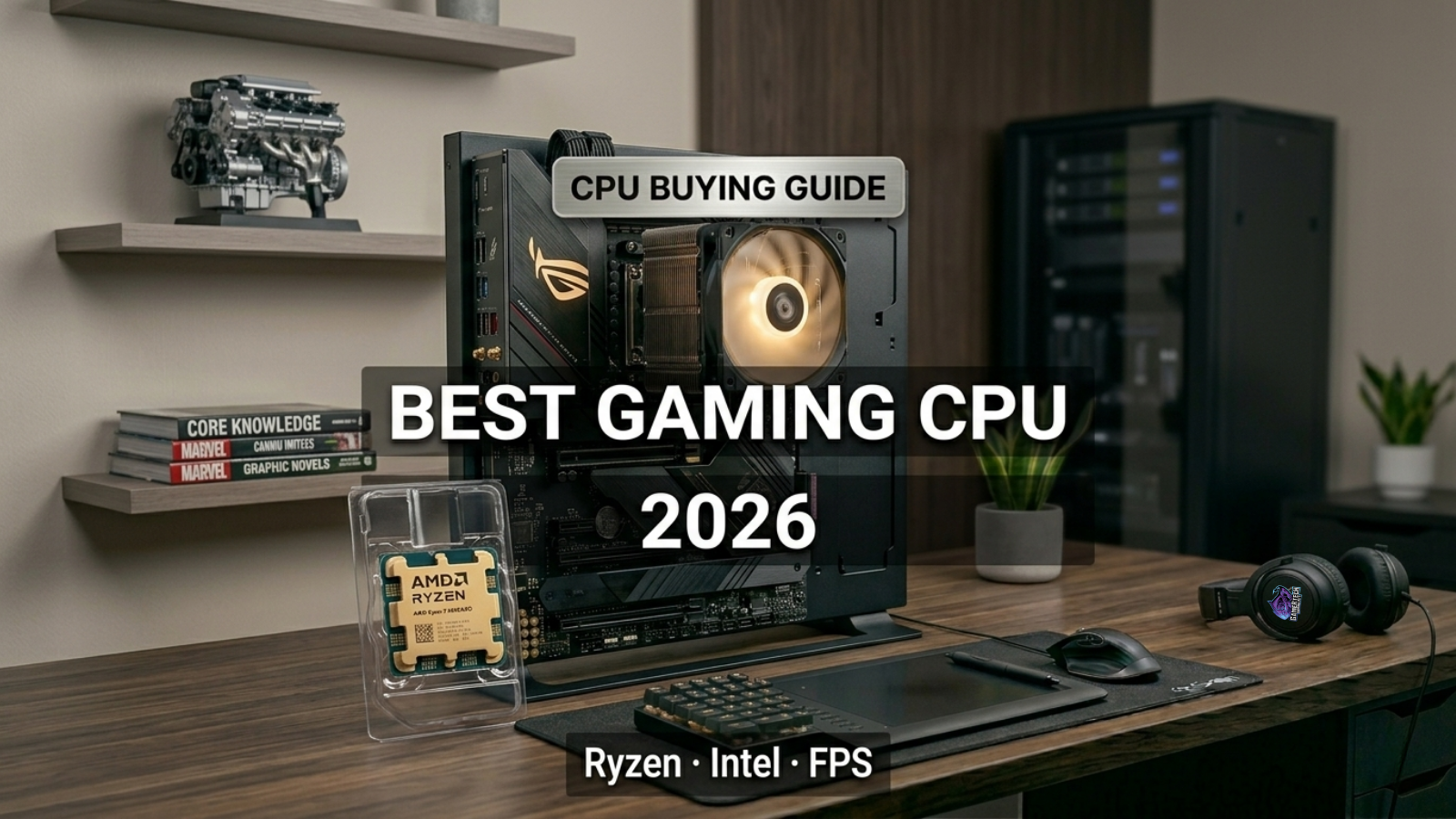


Best Gaming CPU In 2026 What Processor Should You Choose For Your Gam Best Gaming CPU In 2026 . CPU And GPU Combos For Powerful Gaming Performance Best CPU And GPU Combos For Gaming.webp. 2026 CPU Launches AMD Intel NVIDIA Buy Now Or Wait YouTube . Best Gaming CPU 2026 GMDegens Io Best Gaming Cpu . Best Gaming Intel CPU 2026 8 Models Tested Compared Intel CPU
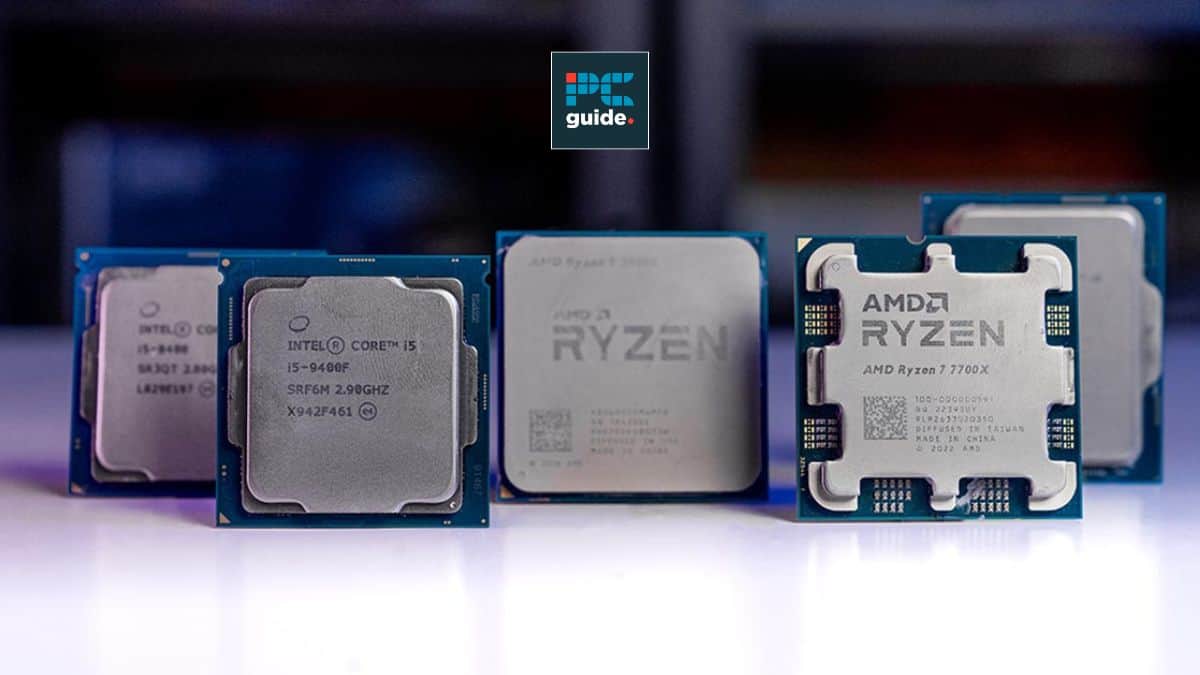

Best CPU For CS2 In 2026 Our Top Picks Tested For Counter Strike 2 Samsung TV Remote Codes Featured Image 29 . Best I5 CPU For Gaming 2026 Expert Reviews Comparisons Best I5 CPU For Gaming . How To Reduce CPU Usage While Gaming Fix High CPU 2026 How To Reduce Cpu Usage While Gaming.webp. Intel Core Ultra 5 250K Plus Test Gaming Benchmarks And Cpu Gaming Intel. 12 Best CPU For Gaming March 2026 Processors Tested Ranked Featured Image Q3q6lajs

CPU Vs GPU In 2026 Key Differences Use Cases And Tips Black Green Red Simple Modern Vlog YouTube Thumbnail 2. CPU Bottleneck Explained What It Is And How To Fix It Switchblade Gaming Cpu Bottleneck Explained Cover.webp. Best CPU For Gaming 2026 Top Gaming Processor The Best CPU For Gaming In 2026 01 . How Does The Latest GameLoop Update Improve Performance Softzap ChatGPT Image Feb 19 2026 06 05 05 PM 1 . Best CPU For Minecraft In 2026 WePC Best Cpu For Gaming 300x169

8 Best CPU Stress Test Software June 2026 Complete Guide Best CPU For Gaming PC . 10 Best Free GPU Benchmark Software January 2026 Guide Best CPU For RTX 3070 . Is 90 Degrees Celsius Hot For A CPU Safe Temperature Guide 2026 How To Check Cpu Temperature. The 9 Best Budget CPUs For Gaming In 2026 Reviewed Ranked How To Determine If Your CPU Can Handle Specific Games 1024x576 . How To Overclock Your CPU Safely For Gaming 2026 Guide Opengraph Image

Best Cores On CPU For Gaming March 2026 Buyer S Guide Model Tested Best Cores On CPU For Gaming 768x419 . CPU And GPU Combos For Powerful Gaming Performance CPU And GPU Roles In System Performance. 12 Best Gaming PC Under 500 In 2026 Tested Reviewed Best CPU For 4K Video Editing PC Build 1024x576 . Best Budget Gaming CPU 2026 Top Picks Under 200 Switchblade Gaming Best Budget Gaming Cpu 2026.webp. AMD Mobile CPU Roadmap Leak Claims Zen 6 Arrives In 2027 Tom S Hardware


Best AM5 CPU For Gaming 2026 Expert Reviews Performance Tests Featured Image 4w457a1t . Best CPU For VR Gaming 2026 Reviews Frame Time Analysis Featured Image Km24a8jo . Best Gaming CPU 2026 Ryzen 7 9800X3D Vs 9600X Vs Intel Best Gaming Cpu 2026 768x432 . Best CPU For Gaming In 2026 These Are The Chips I Recommend For Gaming 1920 80 . Chinese ESports Firm Worked With AMD On 1 000 Hz Gaming Monitor Primed


Do You Need CPU Drivers Intel AMD Windows Guide 2026 Do I Need Cpu. Check Out The Latest ROG Gaming Gear Revealed At CES 2026 . Best Gaming Intel CPU 2026 8 Models Tested Compared Featured Image T5c 8utg . Best Fan Curve For CPU Temp Complete March 2026 Guide Featured Image O1zal00f . Does A Better Graphics Card Increase FPS 2026 Benchmarks BetterFPS Image