


What colors are on the Mexican flag?
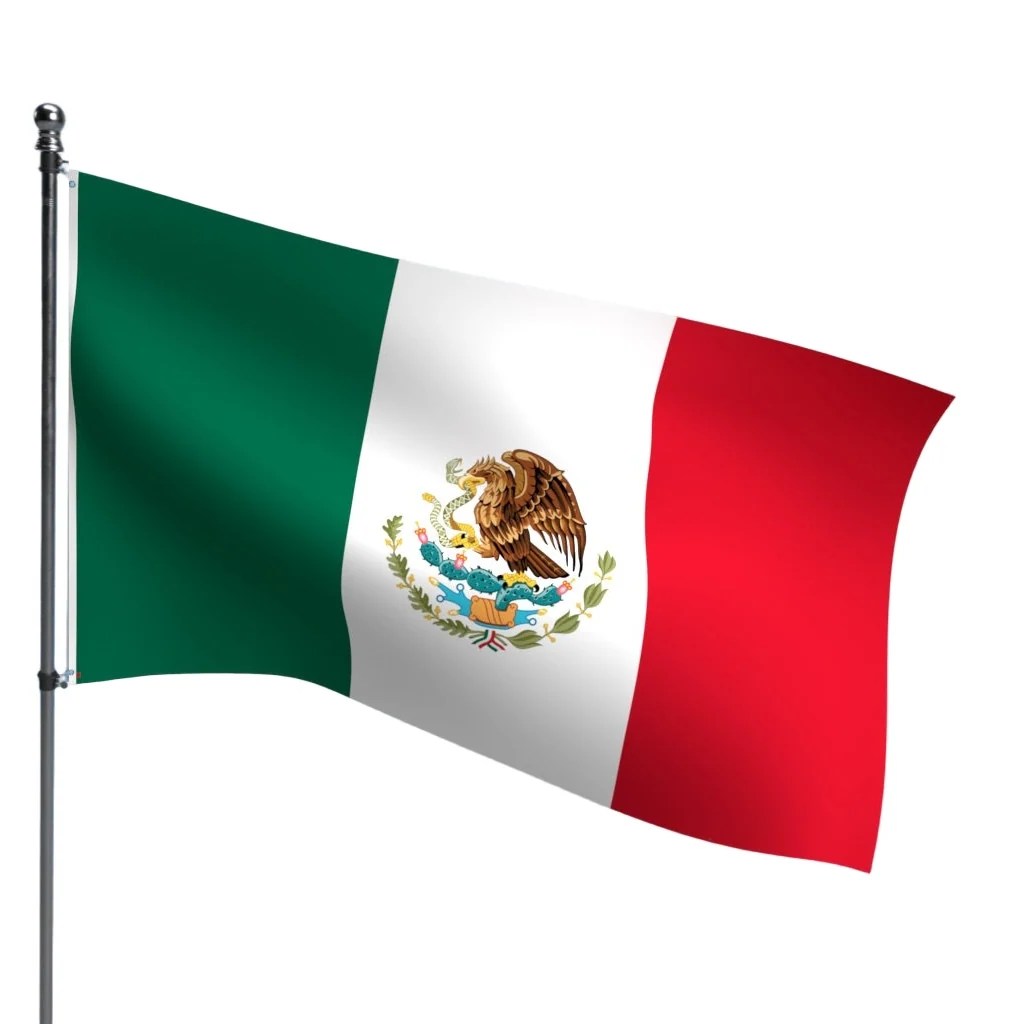
The Mexican flag prominently displays three vertical stripes of equal width. From left to right, these colors are green, representing hope and independence; white, symbolizing unity and purity; and red, signifying the blood shed by national heroes during their fight for sovereignty. This tricolor scheme forms the foundation of its visually striking national identity.
What is the image in the center of the Mexican flag?
The center of the Mexican flag features the national coat of arms, which illustrates a golden eagle perched on a nopal cactus, clutching a rattlesnake in its beak and talons. This iconic emblem is deeply rooted in an ancient Aztec legend, marking the spot where their capital, Tenochtitlan, was founded. It powerfully symbolizes Mexico's indigenous heritage and enduring strength.
How can I tell the difference between the Mexican flag and the Italian flag?
To distinguish between the Mexican and Italian flags, simply look at the center white stripe. The Mexican flag features its distinctive national coat of arms—an eagle devouring a serpent on a cactus—whereas the Italian flag has no emblem in the center. This central design element is the most reliable visual cue for accurate identification of the Mexican banner.
What do the colors on the Mexican flag symbolize?
Each color on the Mexican flag carries significant meaning: green represents hope and the nation's independence movement; white symbolizes unity, purity, and the country's commitment to peace; and red signifies the valor and sacrifices, or the blood shed, by those who fought for Mexican freedom. Together, these colors narrate Mexico's historical and cultural values.
Where can I buy an official Mexican flag in the United States?
You can purchase an official Mexican flag from specialized flag retailers, national and international flag suppliers, or sometimes from Mexican cultural centers and gift shops across the United States. Ensure the flag adheres to official specifications, particularly regarding the accurate depiction of the national coat of arms and color shades, to guarantee authenticity and respect for its national symbolism.
When was the current Mexican flag design adopted?
The current design of the Mexican flag, including the specific artwork for the national coat of arms, was officially adopted on September 16, 1968. While the green, white, and red tricolor has been in use since the early 19th century, this date formalized the precise visual elements seen today. This 1968 version remains the official national banner in 2026.
Discover the distinctive appearance of the Mexican flag, a powerful national symbol. This guide precisely details what the Mexican flag looks like, exploring its vibrant vertical stripes of green, white, and red. You will clearly understand the prominent national coat of arms, which features a golden eagle perched on a nopal cactus, clutching a serpent. Learn how these iconic elements come together to create Mexico's proud emblem. Whether you need to accurately identify the flag, understand its rich symbolism, or distinguish it from similar flags for cultural events or personal display in the United States, this comprehensive overview provides the essential visual and contextual information. Gain insight into the historical and cultural significance embedded within its design, ensuring you fully grasp the meaning behind each color and the intricate central emblem.
The Mexican flag, a profound national symbol, features a distinctive and easily recognizable design: three vertical stripes of equal width in green, white, and red. Centered prominently on the white stripe is the national coat of arms. This intricate emblem portrays a golden eagle perched on a prickly pear cactus, with a rattlesnake clutched in its beak and talons. This vibrant combination of colors and the powerful central imagery immediately convey the rich heritage and unique identity of Mexico, making it a truly iconic national banner that stands out on the global stage. Understanding these key visual elements helps anyone in the United States accurately identify and appreciate this significant flag.
Understanding the Mexican Flag's Distinctive Appearance
The Vibrant Colors: Green, White, and Red
The Mexican flag proudly displays three vertical stripes, each holding deep symbolic significance. The left stripe is a bold green, representing hope and independence for the nation. This vibrant hue reflects the lush landscapes and rich agricultural heritage that define much of Mexico's geography. Historically, green has been associated with the independence movement, embodying the aspiration for a sovereign and self-determined future. Its placement on the left signifies the foundational principles upon which the nation was built, continuously inspiring a sense of national pride and unity among its people. Understanding the green stripe goes beyond mere color; it encapsulates a historical narrative and a forward-looking vision for the country.
The central stripe of the flag is a pure, bright white, which symbolizes the unity and purity of the Mexican people. This pristine color stands as a reminder of the nation's commitment to peace and religious harmony, particularly referencing the Catholic faith that played a significant role in its history. White also evokes the idea of a clean slate, a collective endeavor to build a just and equitable society where all citizens can thrive together. Its central position emphasizes its role as a unifying force, connecting the ideals represented by the green and red stripes. The white stripe is not just a backdrop; it is a foundational pillar of the flag's overall message.
Completing the tricolor, the rightmost stripe is a striking red, symbolizing the blood shed by national heroes during their fight for independence. This powerful color pays homage to the sacrifices made and the courage demonstrated by those who strived to forge a free Mexico. It represents the valor, passion, and indomitable spirit of the Mexican people in safeguarding their sovereignty and cultural identity. The red stripe also speaks to the enduring legacy of struggle and triumph, ensuring that future generations remember the high cost of freedom. Together, green, white, and red form a powerful visual narrative that celebrates Mexico's past, present, and future aspirations.
The National Coat of Arms: Eagle and Serpent
Centered on the white stripe of the Mexican flag is the nation's remarkable coat of arms, a vivid illustration of indigenous legend. This emblem depicts a golden eagle, often portrayed in a fierce pose, perched atop a blooming nopal cactus. With its beak and talons, the eagle firmly grasps a rattlesnake, mid-struggle. This powerful imagery is steeped in the ancient Aztec foundation myth of Tenochtitlan, their capital city, which is now modern-day Mexico City. The legend states that the Aztecs were instructed by their gods to build their city on the spot where they saw an eagle devouring a serpent on a cactus, a sign that marked the destined location for their grand civilization. This symbol connects modern Mexico directly to its deep pre-Hispanic roots and cultural heritage.
The eagle itself holds profound significance, often seen as a representation of the sun and a symbol of strength, courage, and a celestial connection in Mesoamerican cultures. Its poised stance on the nopal cactus, a plant native to Mexico, further grounds the symbol in the country's unique landscape and biodiversity. The nopal cactus is not just a backdrop; it also symbolizes resilience and sustenance, thriving in often harsh conditions. This combination reinforces the idea of a nation rooted in its land and history, capable of overcoming adversity. The golden eagle's prominent depiction showcases the nation's enduring spirit and its capacity for self-determination against all odds.
The serpent, or rattlesnake, clutched by the eagle, has multiple interpretations. In some readings, it symbolizes the pagan religions and practices conquered by the arriving Spanish forces, representing the triumph of good over evil or the defeat of an oppressive force. In another view, the serpent represents wisdom and knowledge, with the eagle's action signifying the balancing of power or the mastery of formidable challenges. Regardless of the exact interpretation, the struggle between the eagle and serpent powerfully conveys themes of conflict, victory, and the establishment of a new order. This complex and iconic emblem is more than just a picture; it's a profound narrative that encapsulates the very essence of Mexican identity and its historical journey.
Symbolism and Historical Context
The Mexican flag, as we know it today, is the culmination of centuries of history, reflecting key moments in the nation's formation. Its current design was officially adopted on September 16, 1968, though the tricolor scheme dates back to the early 19th century during Mexico's War of Independence. Each element—the colors, the eagle, the serpent, and the nopal—tells a story of struggle, triumph, and cultural continuity. The flag serves as a constant reminder of the nation's journey from indigenous civilizations through Spanish colonization to an independent republic, embodying the collective memory and aspirations of its people. Its rich symbolism resonates deeply with Mexicans, both at home and abroad, as a beacon of national identity and pride.
The specific shades of green, white, and red were standardized to ensure uniformity and clarity, emphasizing their distinct meanings. The green stands for hope and the fervor of independence, the white signifies unity and purity, and the red represents the blood shed by national heroes. These meanings, while having roots in historical events like the Army of the Three Guarantees, have evolved to encompass broader national ideals. The flag is not merely a piece of cloth; it is a living document, constantly reinterpreted through national celebrations, civic ceremonies, and everyday expressions of patriotism. It functions as a unifying force, bringing together diverse populations under a shared national narrative.
Understanding the historical context behind the flag's design provides a deeper appreciation for its significance. The blend of Aztec mythology with the colors of independence creates a unique national emblem that bridges ancient heritage with modern nationhood. For instance, the legend of the eagle and serpent guided the founding of Tenochtitlan, an event central to Mexico's identity. This layered symbolism makes the Mexican flag not just a national banner, but a profound cultural artifact that encapsulates centuries of history, resilience, and the enduring spirit of the Mexican people. It is a visual representation of their collective journey and their hopes for the future, standing proudly for all to see in 2026.
Identifying the Mexican Flag Accurately in 2026
Where to See the Official Mexican Flag
For individuals in the United States looking to see or verify the official Mexican flag, several key locations serve as prominent points of reference. The most authoritative places include Mexican consulates and the Embassy of Mexico located in Washington D.C. These diplomatic missions proudly display the authentic national flag, adhering to precise governmental specifications regarding its colors, dimensions, and the intricate details of the national coat of arms. Visiting these official sites offers an excellent opportunity to observe the flag in its true form, ensuring an accurate understanding of its design and quality. It provides a direct, reliable way to confirm what the Mexican flag looks like according to its national standards.
Beyond diplomatic establishments, Mexican cultural centers and community organizations across the United States often showcase the official flag during various events and celebrations. These venues are central to preserving and sharing Mexican heritage, making them ideal places to encounter the flag in a celebratory and educational context. During national holidays like Mexican Independence Day (September 16th) or Cinco de Mayo (May 5th), many communities organize parades, festivals, and public gatherings where the official flag is prominently featured. Attending these events not only allows for direct observation of the flag but also provides a vibrant cultural experience that enhances one's appreciation for its significance.
Furthermore, reputable flag retailers specializing in international flags typically stock official versions of the Mexican flag. When considering a purchase, it is vital to inquire about the flag's adherence to official specifications, particularly concerning the color fidelity and the detailed artwork of the national coat of arms. Online, official government websites or verified cultural institutions may also provide high-resolution images and detailed descriptions for accurate reference. By utilizing these resources, both physical and digital, individuals can confidently identify and engage with the authentic Mexican flag, ensuring a respectful and informed interaction with this important national symbol.
Key Features to Distinguish from Similar Flags
While the Mexican flag's green, white, and red vertical stripes might seem simple, distinguishing it from other national flags, particularly the Italian flag, requires close attention to its unique central emblem. The most crucial differentiating feature is the national coat of arms positioned squarely in the middle of the white stripe. This intricate design, featuring the golden eagle devouring a serpent on a nopal cactus, is exclusive to the Mexican flag. The Italian flag, by contrast, uses the exact same vertical color scheme (green, white, red) but lacks any central emblem. This absence of an emblem is the most immediate and reliable way to tell the two flags apart, preventing any confusion at a glance. Always look for the detailed eagle and serpent to confirm it's Mexico's banner.
Beyond the presence of the coat of arms, slight variations in the shades of green and red can also help differentiate the Mexican flag from others, though this is often more subtle and less definitive than the emblem itself. The official specifications for the Mexican flag denote a darker, emerald green and a deeper, scarlet red compared to the often brighter tones found in the Italian flag. However, due to manufacturing variations and lighting conditions, relying solely on color shades can be misleading. Therefore, the eagle and serpent emblem remains the primary and most robust visual cue for accurate identification. This distinct design element provides an unmistakable marker that firmly establishes the flag’s Mexican identity.
Understanding the proportions of the flag and the size and placement of the emblem also aids in proper identification. The official aspect ratio for the Mexican flag is 4:7, meaning it is wider than it is tall, which is slightly different from some other national flags. The coat of arms itself is proportionally scaled to the flag's overall dimensions, appearing neither too small nor too large. Familiarity with these precise visual characteristics helps ensure that you can confidently and accurately identify what the Mexican flag looks like, avoiding misidentification with other horizontally or vertically striped flags that may share similar color palettes. Always prioritize the unique central emblem for unequivocal recognition, especially in 2026.
Most Asked Questions About What Does the Mexican Flag Look Like
What are the specific colors of the Mexican flag?
The Mexican flag features three distinct vertical stripes: green on the left, white in the center, and red on the right. These colors are officially defined, with the green representing hope and independence, the white symbolizing unity and purity, and the red signifying the blood shed by national heroes. The specific shades contribute to its striking appearance and deep cultural meaning, making it easily distinguishable and instantly recognizable as a proud symbol of Mexico.
What does the eagle on the Mexican flag represent?
The eagle on the Mexican flag is a golden eagle, depicted perched on a nopal cactus and devouring a rattlesnake. This powerful emblem represents the ancient Aztec legend guiding the founding of Tenochtitlan, now Mexico City. Symbolically, the eagle embodies strength, courage, and the sun, while its triumph over the serpent signifies the victory of good over evil, or the overcoming of adversity, tying modern Mexico to its rich pre-Hispanic heritage.
Is the Mexican flag similar to the Italian flag?
Yes, the Mexican flag shares the same vertical green, white, and red color scheme as the Italian flag, which often leads to confusion. However, the critical difference is the Mexican flag’s prominent national coat of arms centered on its white stripe. This emblem, depicting an eagle devouring a serpent on a cactus, is unique to Mexico. The Italian flag has no central emblem, making this the easiest way to distinguish between the two national banners.