






What are the best airports to fly into from the USA for the Dolomites?
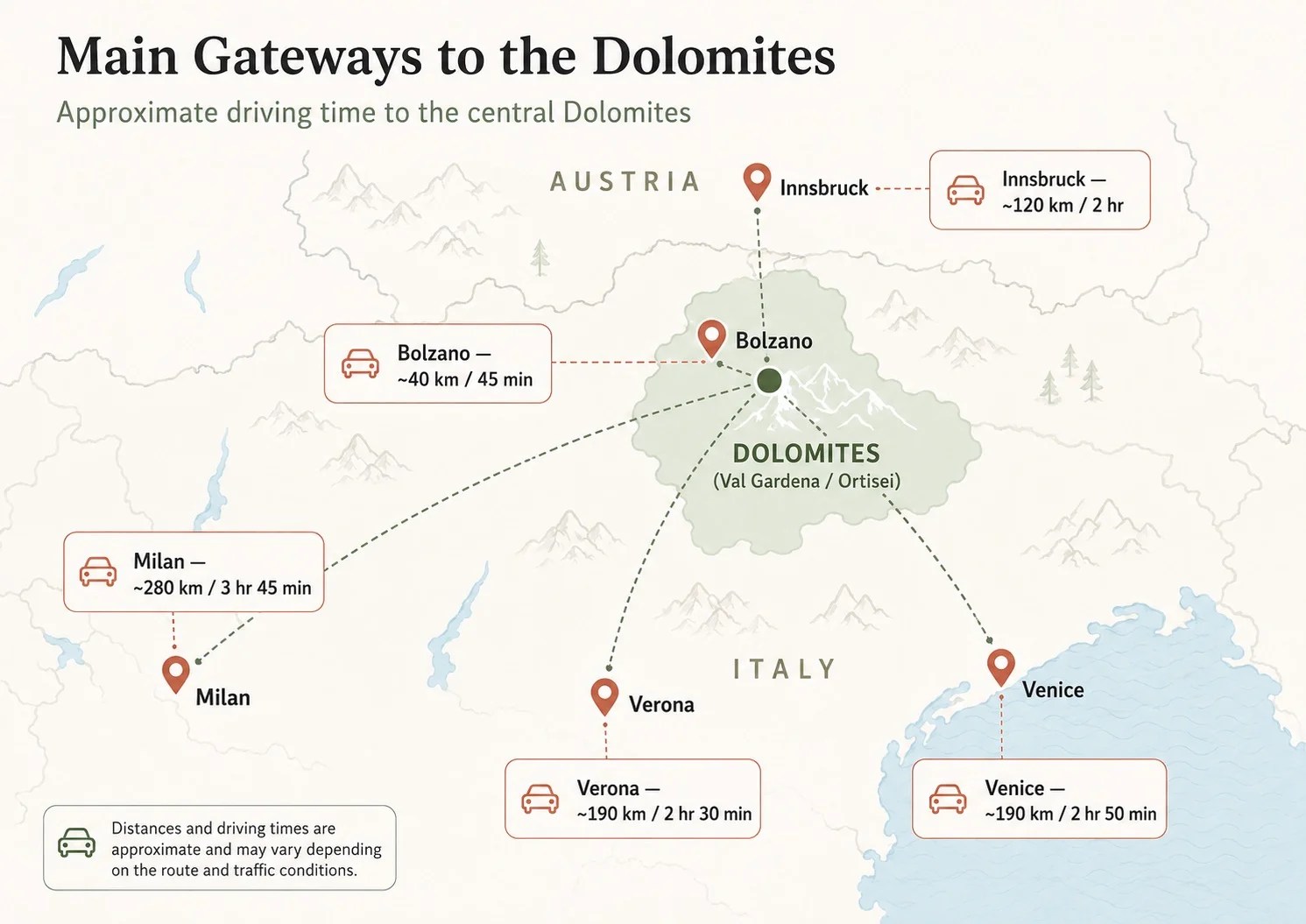
The most convenient airports for U.S. travelers heading to the Dolomites are Venice Marco Polo (VCE) and Verona Villafranca (VRN), offering closer proximity to popular mountain towns. Milan Malpensa (MXP) is another major international hub with good connections, though it requires a slightly longer onward journey. Selecting VCE or VRN often reduces overall transfer time to the Dolomites.
Is a rental car essential for exploring the Dolomites as a US traveler?
While a rental car offers the ultimate flexibility for exploring the Dolomites, it's not strictly essential. The region has an efficient public bus system and extensive cable car network connecting many towns and trailheads. However, a car allows greater freedom to access remote spots and follow scenic routes at your own pace, which many U.S. travelers appreciate.
What is the best time of year for Americans to visit the Dolomites?
For hiking and outdoor activities, the best time for Americans to visit the Dolomites is generally from late June to mid-September. Wildflowers bloom, and all lifts are typically operational. For skiing, December to March offers prime conditions. Shoulder seasons in late spring and early fall provide fewer crowds but some facilities might be closed.
Do US citizens need a visa to visit the Dolomites?
No, U.S. citizens do not need a visa for tourist stays in Italy (and the Schengen Area, which includes Italy) lasting up to 90 days within any 180-day period. You will need a valid passport that is valid for at least three months beyond your intended departure date from the Schengen Area. Ensure your passport meets these requirements before travel.
How long should a typical Dolomites trip be for a US traveler?
A recommended duration for a Dolomites trip from the USA is typically 7 to 10 days. This allows sufficient time to recover from jet lag, explore at least two different valleys, enjoy multiple hikes or activities, and experience the local culture without feeling rushed. A shorter trip might feel too brief given the travel time involved.
What is the currency in the Dolomites and should I carry cash?
The currency used throughout the Dolomites, as part of Italy, is the Euro (EUR). While credit cards are widely accepted in hotels and larger establishments, carrying some cash is highly recommended for smaller purchases, bus tickets, and especially when visiting mountain huts (rifugi) which may not always accept cards. Inform your bank of your travel plans to avoid issues.
What are common pitfalls for US travelers in the Dolomites?
Common pitfalls for US travelers include underestimating driving challenges on mountain roads, not booking accommodations or popular refuges in advance during peak season, failing to inform banks of travel plans, and neglecting to purchase travel insurance. Also, relying solely on English can sometimes be an issue in less touristy areas where Italian or German are primarily spoken.
Planning an epic adventure to the majestic Italian Dolomites from the United States involves careful navigation and smart logistical choices. This guide unpacks everything you need to know about how to get to the Dolomites from USA, from securing the best international flights to choosing optimal ground transportation once you land in Italy. Discover seamless routes, essential travel tips, and insider advice on reaching these stunning mountains efficiently. Whether you prefer flying into major Italian hubs like Venice or Milan, catching convenient trains, or renting a car for ultimate flexibility, we cover all viable options to ensure your journey is smooth. Learn about connecting flights, regional airport transfers, and local transit systems that bring you right to the heart of the Dolomites. Understand visa requirements, currency exchange, and critical packing considerations before you depart. Make your dream trip to the Dolomites a reality with our comprehensive, expert-backed recommendations.
Planning a trip from the United States to the breathtaking Dolomites, a UNESCO World Heritage site, might seem like a formidable task. However, with the right approach and a bit of savvy planning, reaching these iconic Italian Alps is far more accessible than you might think. This guide is crafted specifically for U.S. travelers, offering practical advice and insider tips to ensure your journey is as smooth and enjoyable as the alpine valleys themselves.
Understanding how to get to the Dolomites from USA begins with securing international flights and then strategically navigating Italy's efficient transportation network. We’ll cover everything from major airport hubs to local transit, equipping you with the knowledge to traverse continents and countrysides with confidence. Prepare to immerse yourself in the dramatic peaks, pristine lakes, and charming villages that define this extraordinary region.
| Key Journey Stage | Description for US Travelers | Primary Options | Approx. Duration |
|---|---|---|---|
| International Flight | Connecting from major US airports to Italy. | Direct flights to Milan (MXP), Venice (VCE), Rome (FCO). | 8-10 hours flight time |
| Italian Arrival & Transfer | Getting from the arrival airport to the Dolomites region. | Train, rental car, private transfer, regional bus. | 2-5 hours, depending on airport |
| Dolomites Local Travel | Exploring within the Dolomites once there. | Rental car, local bus system, cable cars, hiking. | Highly variable |
For those wondering how to get to the Dolomites from USA, the first leg of your adventure typically involves a transatlantic flight. Major international airports across the United States offer direct or one-stop flights to Italy's main cities. Milan, Venice, and Rome are common gateways that provide excellent onward connections to the Dolomites region, making your initial choice of arrival city quite important.
Choosing the right Italian airport can significantly impact your travel time and ease of access to the mountains. Venice Marco Polo Airport (VCE) and Verona Villafranca Airport (VRN) are often considered the most convenient due to their closer proximity to the eastern Dolomites. However, Milan Malpensa (MXP) also offers robust connections, albeit with a slightly longer journey to the mountains.
Once you touch down in Italy, the next step in how to get to the Dolomites from USA involves ground transportation. Italy boasts an impressive network of trains and highways, making it relatively straightforward to transition from a bustling city to tranquil alpine landscapes. Rental cars provide the ultimate flexibility, allowing you to explore the Dolomites at your own pace and reach remote trailheads.
Alternatively, a combination of trains and buses can also get you deep into the heart of the Dolomites. High-speed trains link major cities, and regional lines or local bus services then bridge the gap to smaller towns like Cortina d'Ampezzo, Ortisei, or Bolzano. Planning these connections in advance is crucial, especially during peak travel seasons, to ensure a smooth journey.
| Transfer Method | Pros for US Travelers | Cons for US Travelers | Best For |
|---|---|---|---|
| Rental Car | Ultimate flexibility, scenic drives, easy access to remote areas. | Navigation challenges, parking, manual transmission prevalence. | Adventurous travelers, multi-stop itineraries. |
| Train + Bus | Relaxing, budget-friendly, environmentally conscious, no driving stress. | Less flexible, schedule-dependent, multiple transfers. | Solo travelers, those preferring public transport. |
| Private Transfer | Door-to-door service, comfort, no navigation worries. | Most expensive option. | Families, groups, travelers with lots of luggage. |
When you're finally in the Dolomites, the regional bus network becomes an indispensable tool for exploring without a car. These buses connect many popular towns and trailheads, operating frequently during the high season. Some passes, like the Mobilcard, offer unlimited travel on public transport within South Tyrol, which can be a real game-changer for budgeting and convenience.
Cable cars and gondolas are another fantastic way to get around and gain stunning panoramic views without extensive hiking. Many of these lifts operate seasonally, primarily during summer and winter, providing access to mountain huts, viewpoints, and higher elevation trails. Always check their operating schedules before planning your day.
For those keen on immersing themselves fully in the alpine environment, exploring on foot is paramount. The Dolomites are crisscrossed with well-marked hiking trails ranging from gentle valley strolls to challenging via ferratas. Proper hiking gear and an understanding of trail difficulty are essential for a safe and rewarding experience.
| Local Transport Mode | Key Benefits | Considerations | Typical Use Case |
|---|---|---|---|
| Regional Buses | Connects towns and trailheads, affordable, scenic routes. | Schedules can vary, limited night service. | Day trips between villages, reaching trail starts. |
| Cable Cars/Lifts | Quick access to high elevations, breathtaking views, saves energy. | Seasonal operation, can be pricey, weather-dependent. | Accessing mountain huts, viewpoints, ski slopes. |
| On Foot/Hiking | Deep immersion in nature, free, personal pace. | Requires physical fitness, appropriate gear, navigation skills. | Exploring trails, reaching remote lakes and peaks. |
Planning Your Journey: Flights and Airports from the USA
Embarking on a journey to the Dolomites from the United States necessitates a thoughtful approach to international flights. Your choice of Italian arrival airport is the first critical decision, as it significantly impacts the overall duration and complexity of your onward travel. Most American travelers opt for major hubs like Milan, Venice, or Rome due to frequent direct connections.
Consider flying into Venice Marco Polo Airport (VCE) or Verona Villafranca Airport (VRN) if your primary goal is to reach the eastern Dolomites quickly. These airports are generally closer, minimizing transfer times to popular areas such as Cortina d'Ampezzo or the Val Gardena. Milan Malpensa (MXP) also serves as a strong contender, particularly if you find better flight deals, though it will require a slightly longer connecting journey.
Booking your flights several months in advance, especially for peak seasons like summer or winter, can yield substantial savings and better availability. Utilize flight comparison websites to scout for the best routes and prices, and be flexible with your travel dates if possible. Weekday flights are often more economical than weekend departures, allowing you to maximize your budget for experiences in the Dolomites.
Major US Hubs to Italian Gateways
- New York (JFK, EWR): Offers numerous direct flights to Milan (MXP), Rome (FCO), and Venice (VCE).
- Los Angeles (LAX): Direct flights typically available to Rome (FCO) and Milan (MXP).
- Chicago (ORD): Direct service to Rome (FCO) and Milan (MXP) is common.
- Atlanta (ATL): Often has direct flights to Rome (FCO) with good connections.
- Miami (MIA): Direct routes to Rome (FCO) are frequently available.
Once you’ve selected your arrival airport, the next step involves planning your onward travel within Italy. This typically means transitioning from the airport to a train station or picking up a rental car. Researching public transportation options like airport shuttles or local trains that connect directly to major rail hubs is highly recommended to avoid any last-minute scrambling.
For instance, from Venice Marco Polo, you can take an ATVO bus or an Alilaguna waterbus to Venice Mestre train station, which offers direct regional trains toward Belluno or Bolzano. From Milan Malpensa, express trains run directly to Milan Centrale, a major hub for connections throughout northern Italy. Having these connections pre-booked or at least researched can save valuable travel time.
Remember that European train systems are generally very efficient and a popular choice for intercity travel. Purchasing train tickets in advance through Trenitalia or Italo websites often secures better rates, especially for high-speed routes. This foresight ensures a smoother transition from your international flight to the initial stages of your Dolomites adventure.
Navigating Italy to the Dolomites
After your transatlantic flight lands in Italy, the real adventure of reaching the Dolomites begins with navigating the country's diverse transportation landscape. You have several excellent options for bridging the gap between your arrival city and the base of the mountains, each offering a distinct balance of convenience, cost, and flexibility. Choosing the right method depends on your travel style and itinerary.
Many travelers find that renting a car provides the most freedom, allowing them to explore the Dolomites' winding roads and picturesque villages at their own pace. Alternatively, Italy's extensive train network, combined with regional buses, offers a relaxing and often scenic way to travel, particularly if you prefer not to drive on unfamiliar roads. Private transfers are also available for a more luxurious and stress-free journey.
Booking your chosen mode of transport in advance is always a good idea, especially during peak tourist seasons. This pre-planning can save you time upon arrival and potentially secure better rates. Whether it's a rental car reservation, train tickets, or a private shuttle, having these details confirmed ensures a seamless transition into the stunning alpine region you've traveled so far to see.
Train Travel and Rental Cars
- Trains: Efficient connections from major Italian cities to Bolzano (Bozen) or Belluno, key gateways to the Dolomites.
- Rental Cars: Available at all major airports; ideal for exploring the Dolomites' scenic routes independently.
- Buses: Regional bus services connect train stations to smaller Dolomite towns and villages.
- Private Transfers: Door-to-door service from airports directly to your Dolomites accommodation, often pre-booked.
If you opt for train travel, aim for cities like Bolzano (in South Tyrol) or Belluno (in the Veneto region) as your primary rail destinations. Bolzano, in particular, is an excellent hub, well-connected by regional trains from Verona, Milan, and Venice. From Bolzano, a comprehensive bus system operated by Südtirol Mobil can take you to popular valleys like Val Gardena, Val di Fassa, or Alta Badia.
Renting a car offers unparalleled flexibility for exploring the Dolomites. You can pick up a vehicle directly at your arrival airport and drive straight into the mountains. Remember that many rental cars in Europe are manual transmission, so specify automatic if needed. Also, familiarize yourself with Italian driving rules, including ZTLs (Limited Traffic Zones) in historic city centers and mountain pass etiquette.
When considering how to get to the Dolomites from USA and then move around locally, a rental car truly opens up possibilities. It allows spontaneous detours to hidden gems and easy access to trailheads not served by public transport. However, parking in popular towns can be challenging, especially in summer, so plan accordingly and look for designated parking areas.
Inside the Dolomites: Local Transport and Exploration
Once you’ve arrived in the Dolomites, understanding the local transportation options is key to unlocking the full potential of your trip. While a rental car offers the most flexibility, the region also boasts an excellent public transport network that can get you to many popular spots. Combining different modes of transport often proves to be the most effective way to explore the diverse landscapes.
The local bus system, particularly in South Tyrol, is highly efficient and covers a vast area, connecting towns, villages, and many trailheads. Investing in a regional travel pass, such as the Mobilcard, can provide unlimited access to buses, regional trains, and even some cable cars, offering significant savings and convenience. These passes are a smart choice for travelers keen on hiking and moving between valleys.
Beyond buses, cable cars and chairlifts are integral to the Dolomites experience, offering breathtaking aerial views and quick access to higher elevations. They operate primarily during the summer and winter seasons, allowing hikers to reach alpine pastures or mountain huts (rifugi) with minimal effort, and skiers to navigate the vast ski domains. Always check the operating dates and times, as these can vary seasonally and by specific lift.
Buses, Cable Cars, and Self-Driving
- South Tyrol Mobilcard: Offers unlimited travel on public buses, regional trains, and some cable cars.
- Dolomiti Bus (Veneto): Connects towns in the eastern Dolomites, including Cortina d'Ampezzo.
- Cable Cars & Lifts: Essential for accessing high-altitude trails, rifugi, and panoramic viewpoints.
- Electric Bikes: A popular way to explore valleys and designated bike paths, with many rental options.
For those who prefer a more structured approach, guided tours are available, ranging from day hikes with local experts to multi-day trekking packages. These tours often include transportation, allowing you to focus purely on the scenery and activity without worrying about logistics. They are a great option for solo travelers or those seeking deeper insights into the region's geology and culture.
If you do opt for a rental car, be prepared for mountain driving. Roads are generally well-maintained but can be winding and steep. Parking can be a premium in popular villages like Ortisei or Cortina d'Ampezzo, especially during high season. Look for marked parking lots (often paid) and consider parking slightly outside town centers for easier access. The freedom of a car, however, allows you to chase sunrises, visit multiple lakes in a day, or explore less-frequented areas.
Remember that the best mode of local transport often depends on your specific itinerary and preferences. A combination of a rental car for flexible exploration, paired with local buses or cable cars for accessing specific trails or viewpoints, typically provides the most comprehensive and enjoyable Dolomites experience. Don't underestimate the joy of simply walking through a charming village or along a valley path, taking in the serene beauty at your own pace.
Essential Tips for US Travelers
Preparing for your trip to the Dolomites from the USA involves more than just booking flights and arranging local transport; it also means understanding essential travel practicalities. A little foresight regarding currency, language, and cultural norms can significantly enhance your experience and minimize unexpected hiccups during your adventure in the Italian Alps. Think of it as laying a solid foundation for your unforgettable journey.
First off, Italy uses the Euro (EUR), so ensure you have a plan for currency. While credit cards are widely accepted in most hotels, restaurants, and larger shops, having some cash on hand for smaller purchases, local markets, or mountain huts (rifugi) is always wise. Inform your bank of your travel plans to avoid any issues with card transactions abroad, and check for foreign transaction fees.
Language is another important consideration. While Italian is the official language, German is also widely spoken in South Tyrol (Alto Adige), the northern part of the Dolomites, due to its historical ties. English is commonly understood in tourist areas, but learning a few basic Italian phrases like