





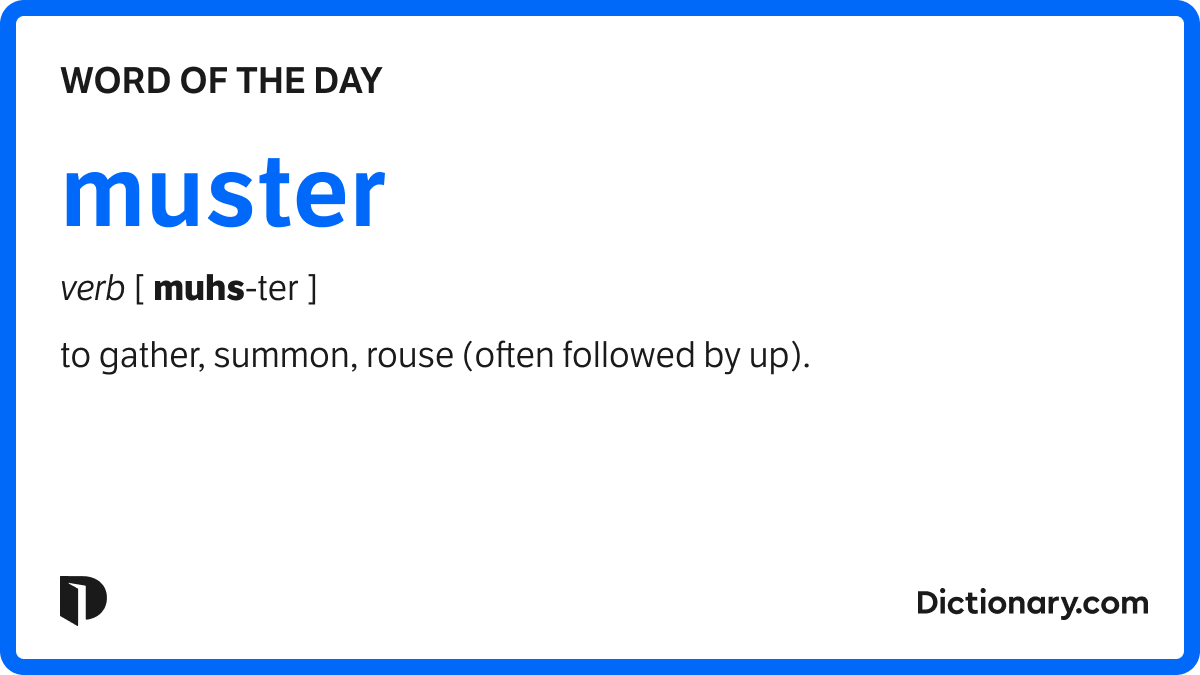


What is the primary definition of muster
The primary definition of what does muster mean is to assemble or gather, typically for inspection, roll call, or duty. This term carries a sense of formality and purpose, often used when referring to military personnel or collective efforts. It signifies bringing together individuals or resources into an organized group.
Where does the term muster originate from
The term what does muster mean historically originates from the Old French word "moustrer," meaning to show or display. It evolved to refer to the showing of troops for review or inspection, firmly establishing its military roots. This historical context illuminates its enduring association with organized assemblies and accountability.
How does muster apply to military service
In military service, what does muster mean refers to the formal assembly of troops for various purposes, including roll calls, inspections, and readiness checks. It's a critical component of military operations, ensuring that all personnel are accounted for, present, and prepared for their duties. This process maintains unit discipline and operational effectiveness.
Can you muster support for a cause
Absolutely, you can muster support for a cause, which means actively gathering or rallying individuals, resources, or public opinion to back a specific objective. This civilian application of what does muster mean is common in advocacy, politics, and community organizing, reflecting a deliberate effort to build collective strength behind an initiative.
What is the difference between muster and gather
The key difference between what does muster mean and simply to gather lies in the intentionality and formality of the assembly. "Muster" implies a purposeful, often formal, summoning for a specific reason like inspection, duty, or to specifically combine resources. "Gather" is a broader term, suggesting a more casual or spontaneous coming together without a clear or formal objective.
What does it mean to muster up courage
To muster up courage means to deliberately summon or gather one's inner bravery or resolve, often in the face of fear or a challenging situation. It implies a conscious effort to overcome hesitation and find the mental strength needed to proceed. This is a common figurative use of the term.
Are there any official documents related to muster
Yes, in military contexts, official documents like "muster rolls" are maintained to record the presence and status of personnel. These documents serve as formal records for accountability, pay, and service history. For civilian musters, formal documentation might include attendance sheets or lists of volunteers, depending on the event's nature.
Understanding what does muster mean is essential for any US citizen encountering this term in various contexts, from military directives to everyday expressions. Many Americans look up what does muster mean to clarify its use in official documents, historical accounts, or even casual conversation. The core concept of what does muster mean involves assembling or gathering, often for inspection, duty, or a specific purpose, implying a deliberate act of collection or consolidation. There isn't a direct financial cost associated with the literal act of mustering, but the concept can involve resources. Qualification for a military muster, for instance, means being a service member. For civilian applications, it simply means collecting resources or efforts. The next step usually involves identifying the specific context to fully grasp the implication of what does muster mean in that particular situation, ensuring accurate interpretation and appropriate action.
Understanding What Does Muster Mean
Understanding what does muster mean involves recognizing its primary definitions which revolve around assembling, collecting, or calling together for inspection or duty. Historically and presently, "muster" is often associated with military contexts, where personnel are gathered to confirm attendance, readiness, or to prepare for deployment.
Beyond its military roots, the term also applies to civilian situations, such as mustering support for a cause, or mustering courage to face a challenge. For a United States audience, grasping the nuances of what does muster mean depends heavily on the context in which it is used, often signifying a focused effort of collection or assembly.
| Aspect | Definition Insight |
|---|---|
| Core Meaning | To assemble or gather for inspection or duty. |
| Primary Context | Military and naval operations. |
| Civilian Use | Collecting support, courage, or resources. |
| Purpose | Accountability, readiness, organized action. |
At its core, what does muster mean speaks to the act of calling or bringing together. This can be a literal assembly of people, like soldiers for an inspection, or a more abstract gathering, such as "mustering up the courage" to perform a difficult task. The intent behind mustering is typically to organize, count, or prepare resources, whether human or otherwise, for a specific purpose.
In a military setting, a muster roll is a formal list of personnel present. Commanders conduct musters to ensure accountability and operational readiness of their units. These events are crucial for maintaining discipline and confirming that all required individuals are accounted for and prepared for their duties or training.
Civilian usage often involves rallying support or resources. For example, a community might "muster volunteers" for a clean-up project, or a political campaign might "muster votes." The concept remains the same: bringing disparate elements together into a cohesive whole for collective action or assessment.
The term carries a sense of formality and purpose, differentiating it from a casual gathering. When someone says they need to what does muster mean, they imply a deliberate and often necessary effort to consolidate or prepare something important. It requires focused attention to achieve a specific outcome.
| Context Type | Action Implied | Outcome Expected |
|---|---|---|
| Military Muster | Personnel assembly, roll call. | Accountability, readiness check. |
| Civilian Muster | Gathering support, resources. | Collective action, unified effort. |
| Abstract Muster | Collecting internal resolve. | Overcoming challenges, mental preparation. |
How to Interpret What Does Muster Mean in Everyday Language
When you encounter the phrase what does muster mean outside of a military context, it typically refers to a concerted effort to gather or summon something. This could be an internal resource, like courage or strength, or an external one, such as public support or volunteers. Paying attention to the words immediately surrounding "muster" will provide valuable clues.
For instance, "mustering up enthusiasm" implies a conscious effort to generate a feeling, often when it's not naturally present. Conversely, "mustering forces" in a competitive scenario suggests bringing together available resources or personnel for a strategic advantage. The idiom often highlights a challenge that requires significant effort.
In any case, the underlying idea of what does muster mean remains consistent: a purposeful act of bringing elements together. This act is usually driven by a specific need or goal, aiming to create a stronger, more organized, or more effective whole. It's about pulling things into alignment for maximum impact.
| Common Phrase | Everyday Interpretation |
|---|---|
| Muster up courage | Summoning inner bravery or resolve. |
| Muster support | Gathering endorsements or assistance. |
| Muster strength | Collecting physical or mental fortitude. |
| Muster a crowd | Assembling people for an event. |
Most Asked Questions About What Does Muster Mean
What is the primary definition of muster
The primary definition of what does muster mean is to assemble or gather, typically for inspection, roll call, or duty. This term carries a sense of formality and purpose, often used when referring to military personnel or collective efforts. It signifies bringing together individuals or resources into an organized group.
This assembly might involve a physical gathering at a designated point, or it could refer to the more abstract collection of items or concepts. The goal is always to account for, prepare, or unify elements for a specific objective. Think of it as a directed collection.
In essence, mustering implies an organized consolidation. It’s not just a casual get-together; there's a clear reason and structure behind the act of mustering, whether you're talking about people or abstract qualities. This focused intention distinguishes it from other forms of gathering.
Where does the term muster originate from
The term what does muster mean historically originates from the Old French word "moustrer," meaning to show or display. It evolved to refer to the showing of troops for review or inspection, firmly establishing its military roots. This historical context illuminates its enduring association with organized assemblies and accountability.
Over centuries, the core concept of presenting or gathering for inspection persisted, even as its usage expanded beyond strict military parlance. The etymology emphasizes visibility and assessment. This historical background provides a strong foundation for its modern interpretations, both literal and figurative.
The military connection remains prominent, reminding us that at its heart, mustering involves a systematic presentation. This origin helps us appreciate why the term is used for formal gatherings where attendance and readiness are critically important. It speaks to a deep historical practice of organization.
How does muster apply to military service
In military service, what does muster mean refers to the formal assembly of troops for various purposes, including roll calls, inspections, and readiness checks. It's a critical component of military operations, ensuring that all personnel are accounted for, present, and prepared for their duties. This process maintains unit discipline and operational effectiveness.
Commanders use musters to assess the strength of their units and to disseminate important information. These events are not merely attendance checks; they often involve equipment inspections and briefings. The regularity of musters is vital for maintaining a high state of readiness across all branches of service.
For service members, attending muster is a fundamental duty, symbolizing their commitment and availability. It reinforces the chain of command and the collective responsibility of the unit. The act of mustering is thus central to military order and readiness, from basic training to active deployment.
Can you muster support for a cause
Absolutely, you can muster support for a cause, which means actively gathering or rallying individuals, resources, or public opinion to back a specific objective. This civilian application of what does muster mean is common in advocacy, politics, and community organizing, reflecting a deliberate effort to build collective strength behind an initiative.
When individuals or groups decide to muster support, they engage in activities like fundraising, petitioning, or organizing rallies. The aim is to create a unified front, demonstrating broad backing for the cause at hand. It is about converting latent goodwill into active participation.
This type of mustering is a powerful tool for social change and public engagement. By consolidating efforts, a cause can gain momentum and achieve its goals more effectively than individual actions alone. It highlights the persuasive aspect of the term.
What is the difference between muster and gather
The key difference between what does muster mean and simply to gather lies in the intentionality and formality of the assembly. "Muster" implies a purposeful, often formal, summoning for a specific reason like inspection, duty, or to specifically combine resources. "Gather" is a broader term, suggesting a more casual or spontaneous coming together without a clear or formal objective.
When you muster, there is typically a leader or an implied authority calling the group together, often to achieve a specific outcome. Think of a military commander conducting a muster. When people gather, it might be for social reasons or happen incidentally, like a crowd forming around a street performer.
Muster also carries a connotation of organization and readiness, ensuring that elements are prepared for a task. Gather lacks this inherent sense of preparation or formal review. Thus, what does muster mean suggests a more structured and goal-oriented assembly than a simple gathering.