


















What is gamma in options trading?
Gamma in options trading measures how much an option's delta changes for every one-point move in the underlying asset's price. It reflects the rate of change of delta, indicating an option's sensitivity to price fluctuations. A high gamma implies that the option's value will react more sharply to price movements, affecting a trader's risk and profit potential significantly.What does gamma mean in photography and displays?
In photography and displays, gamma correction adjusts the non-linear relationship between an image's pixel values and its perceived brightness by the human eye. This process ensures that images appear with accurate tones and contrast, preventing them from looking too dark or too bright. Proper gamma calibration is essential for consistent and realistic visual reproduction across different screens.What are gamma rays and their practical uses?
Gamma rays are a highly energetic form of electromagnetic radiation, originating from the decay of atomic nuclei or other nuclear processes. They are widely used in medicine for cancer treatment (radiotherapy) and medical imaging. Industrially, gamma rays sterilize medical equipment and food, and are employed in non-destructive testing to detect flaws in materials due to their strong penetrating power.How does understanding gamma benefit investors?
Understanding gamma significantly benefits investors in options trading by providing insight into the volatility of their positions. A high gamma signals that an option's sensitivity to price changes will rapidly accelerate or decelerate, which means potential profits or losses can increase quickly. This knowledge allows investors to adjust their hedging strategies, manage risk more effectively, and make more informed decisions based on expected market movements.Can gamma influence video game graphics?
Yes, gamma settings can significantly influence video game graphics by controlling the overall brightness and contrast of the in-game visuals. Adjusting gamma allows players to fine-tune visibility, especially in dark areas, which can be critical for gameplay. Proper gamma calibration ensures that the game's intended visual atmosphere is accurately displayed, enhancing the immersive experience and player engagement.What's the difference between gamma and delta in financial instruments?
Delta measures the sensitivity of an option's price to a one-point change in the underlying asset's price, indicating directional exposure. Gamma, on the other hand, measures how much that delta will change for every one-point move in the underlying asset. Essentially, delta tells you the current exposure, while gamma tells you how quickly that exposure is changing, acting as the 'acceleration' of delta.Understanding what does gamma mean is crucial across various fields, from finance to physics and digital imaging. This comprehensive guide helps unravel the multifaceted definitions and practical applications of gamma for a U.S. audience. Whether you are delving into options trading, adjusting image contrast, or studying radiation, grasp the core concepts of gamma to make informed decisions. Discover how this term impacts real-world scenarios, interpret its values, and navigate its significance in daily technology and scientific advancements. This resource is designed to be a clear, human-friendly explanation, ensuring you walk away with a solid understanding of gamma's role and importance, reflecting common search interests and informational needs.
What Exactly Does Gamma Mean? An Overview
Gamma is one of those terms that pops up in conversations across diverse fields, from intricate financial markets to the science of light and even the deep complexities of physics. It is rarely a standalone concept but instead acts as a crucial modifier or measure, shaping how we understand risk, visual perception, and fundamental forces. Pinpointing what does gamma mean really depends on the context you are looking at.
This article aims to cut through the jargon, offering clear, human-friendly explanations for U.S. readers. We will explore the primary meanings of gamma, helping you grasp its significance whether you are a budding investor, a photography enthusiast, or simply curious about scientific terms. Get ready to demystify this powerful concept and see how it truly matters in different real-world scenarios.
| Field | Gamma's Meaning | Key Application |
|---|---|---|
| Finance (Options) | Sensitivity of Delta to underlying asset price changes | Risk management, hedging strategies |
| Digital Imaging | Non-linear operation to encode/decode luminance | Image correction, display calibration |
| Physics | High-energy electromagnetic radiation | Medical imaging, nuclear processes |
| Mathematics | Gamma function (extension of factorial) | Probability, statistics, complex analysis |
Understanding Gamma in Different Contexts
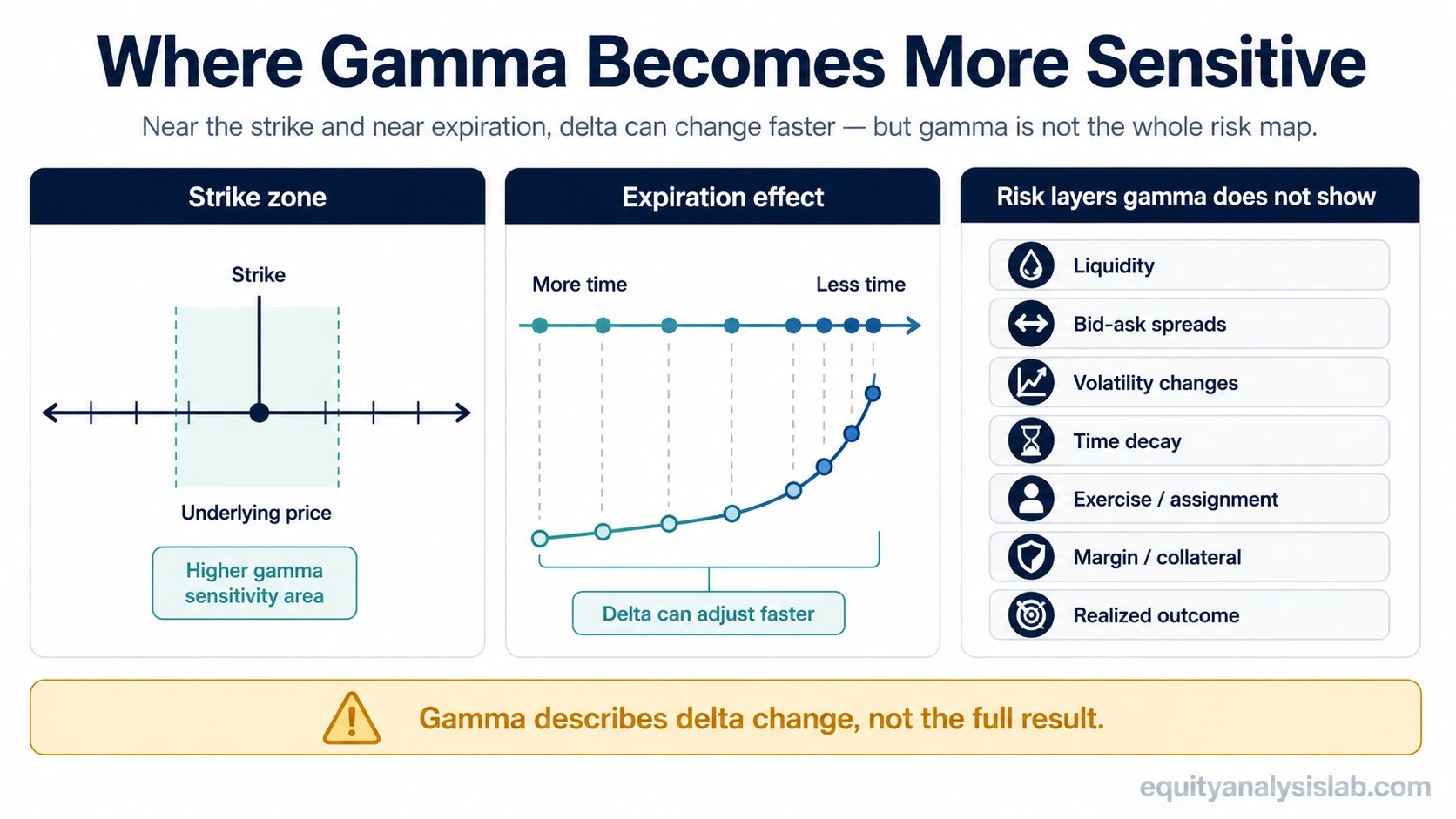
In the world of finance, specifically options trading, gamma measures the rate of change of an option's delta with respect to a change in the underlying asset's price. Think of it as the acceleration of your option's sensitivity, telling you how much more (or less) exposure you will have as the stock moves. A high positive gamma means your delta increases quickly when the underlying stock rises, and decreases quickly when it falls, often amplifying profit or loss.
When it comes to digital imaging and displays, gamma correction is all about managing luminance levels to ensure colors look accurate and images appear balanced to the human eye. Our eyes do not perceive brightness linearly, so a camera records light differently than how a display shows it. Gamma correction adjusts this non-linear relationship, making sure dark tones are not crushed and bright areas are not blown out, providing a more visually pleasing and realistic image.
Shift gears to physics, and what does gamma mean takes on a wholly different, more fundamental role. Here, gamma often refers to gamma rays, which are a form of electromagnetic radiation with extremely short wavelengths and high frequencies, originating from radioactive decay or nuclear processes. These high-energy photons can penetrate most materials and have significant applications in medicine, like cancer therapy, and industrial sterilization, but also pose radiation hazards.
Beyond these, gamma also appears in mathematics through the gamma function, a generalized version of the factorial function for complex numbers. It is a cornerstone in fields like probability theory and statistics, essential for calculations involving distributions and complex analysis. Each of these distinct applications highlights gamma's importance as a core concept across varied disciplines.
| Context | Practical Insight | Impact on User |
|---|---|---|
| Options Trading | Higher gamma means more dynamic delta changes, requiring active management. | Traders must constantly monitor their positions. |
| Photography/Displays | Correct gamma ensures accurate color reproduction and visual fidelity. | Viewers see images as intended by the creator. |
| Nuclear Science | Gamma radiation offers medical benefits but demands safety precautions. | Patients receive treatment, workers need protection. |
| Mathematical Modeling | Gamma function enables complex calculations in advanced analytics. | Researchers solve intricate problems, develop new models. |
How to Interpret Gamma and Its Real-World Impact
Interpreting gamma often requires a clear understanding of the specific field you are engaging with. For options traders, a high gamma indicates that your position is very sensitive to price movements in the underlying asset, leading to rapid changes in your profit or loss as the stock moves. This means you need to be nimble and ready to adjust your hedges, as your exposure can shift dramatically with even small price fluctuations.
In digital photography or graphic design, adjusting gamma helps you control the brightness and contrast of an image, particularly in the mid-tones. A higher gamma value will make an image appear darker, while a lower gamma value will brighten it. Properly calibrating your monitor's gamma ensures that the images you see and edit are true to life, preventing discrepancies when viewed on other devices or printed.
From a public health and safety perspective, understanding gamma rays involves recognizing their penetrating power and the need for shielding. While beneficial in specific medical treatments, exposure to uncontrolled gamma radiation can be harmful. Knowing the risks and safety protocols is paramount for anyone working near radioactive materials or undergoing radiation therapy, ensuring appropriate protection measures are always in place.
| Field of View | Gamma Interpretation | Key User Action |
|---|---|---|
| Finance (Trading) | High Gamma = Fast Delta Change | Frequent rebalancing of portfolio |
| Image Editing | Adjusting Gamma = Brightness/Contrast Control | Monitor calibration, creative image tuning |
| Health & Safety | Gamma Rays = Penetrating Radiation | Implement proper shielding and safety protocols |
Frequently Asked Questions About Gamma
What is the most basic definition of gamma?
Gamma is a term used to describe a rate of change or a form of energy across different scientific and technical fields. Its exact meaning is highly context-dependent, referring to everything from the sensitivity of financial derivatives to high-energy electromagnetic radiation or mathematical functions. Understanding which field you are operating in is the first step to clarifying its definition.
For instance, in options trading, it measures how an option's delta changes with the underlying asset's price movement. In digital imaging, it defines the non-linear relationship between pixel values and perceived brightness. In physics, gamma identifies a specific type of high-energy radiation.
How does gamma affect image quality on screens?
Gamma directly influences the perceived brightness and contrast of an image on a display. Displays are designed to process pixel values non-linearly to match how human eyes perceive light, and gamma correction ensures this mapping is accurate. Without proper gamma correction, images can appear too dark, too bright, or with muted colors, losing detail in shadows or highlights.
A correctly calibrated gamma setting ensures that an image's tonal values are accurately represented, making shadows distinct and highlights clear. This leads to a more natural and visually appealing viewing experience, critical for professional photography and casual viewing alike.
What is a gamma ray and where are they used?
Gamma rays are a high-energy form of electromagnetic radiation, similar to X-rays but with shorter wavelengths, originating from nuclear processes. They are used extensively in medical applications, such as radiotherapy to treat cancer, and in industrial settings for sterilization of equipment and food products, as well as for inspecting materials for flaws due to their penetrating power.
These powerful rays are a natural byproduct of radioactive decay in certain elements, and they possess enough energy to ionize atoms, which can be both destructive and beneficial depending on controlled application. Their ability to penetrate dense materials makes them invaluable for various scientific and industrial diagnostic purposes.
Why is gamma considered important in financial markets?
In financial markets, especially options trading, gamma is crucial because it indicates how quickly an option's delta will change as the underlying asset's price moves. This rapid change can significantly impact a trader's risk exposure and potential profits or losses. High gamma means a position becomes more sensitive to price swings, leading to dynamic shifts in hedging requirements.
Traders who understand gamma can better manage their portfolios, anticipate potential risks, and adjust their strategies to capitalize on volatility or protect against unexpected market shifts. It is a key element for those looking to fine-tune their exposure to market movements beyond simple directional bets.
Can gamma values be adjusted by users?
Yes, users can often adjust gamma values in various contexts, particularly in digital imaging and display settings. For computer monitors and televisions, there are usually settings to tweak gamma levels, allowing users to calibrate their screens for optimal viewing based on their environment or preferences. This helps ensure colors and brightness appear as intended.
In image editing software, photographers and graphic designers regularly adjust an image's gamma to correct exposure, enhance contrast, or achieve specific artistic effects. While the gamma of a physical radiation source cannot be adjusted, its impact on imaging or data acquisition can be controlled through equipment settings or post-processing.
What is the relationship between gamma and delta in options trading?
Gamma is essentially the rate of change for delta in options trading; it measures how much an option's delta will move for every one-point change in the underlying asset's price. Delta itself measures the sensitivity of an option's price to changes in the underlying asset's price, and gamma provides the 'speed' or 'acceleration' of that delta. So, gamma tells you how dynamic your delta exposure is.
A higher gamma means that small movements in the underlying asset can lead to significant shifts in your delta, making your position's exposure highly volatile. This interplay is vital for managing risk and understanding the dynamic nature of an options portfolio, especially near expiry or for out-of-the-money options.